
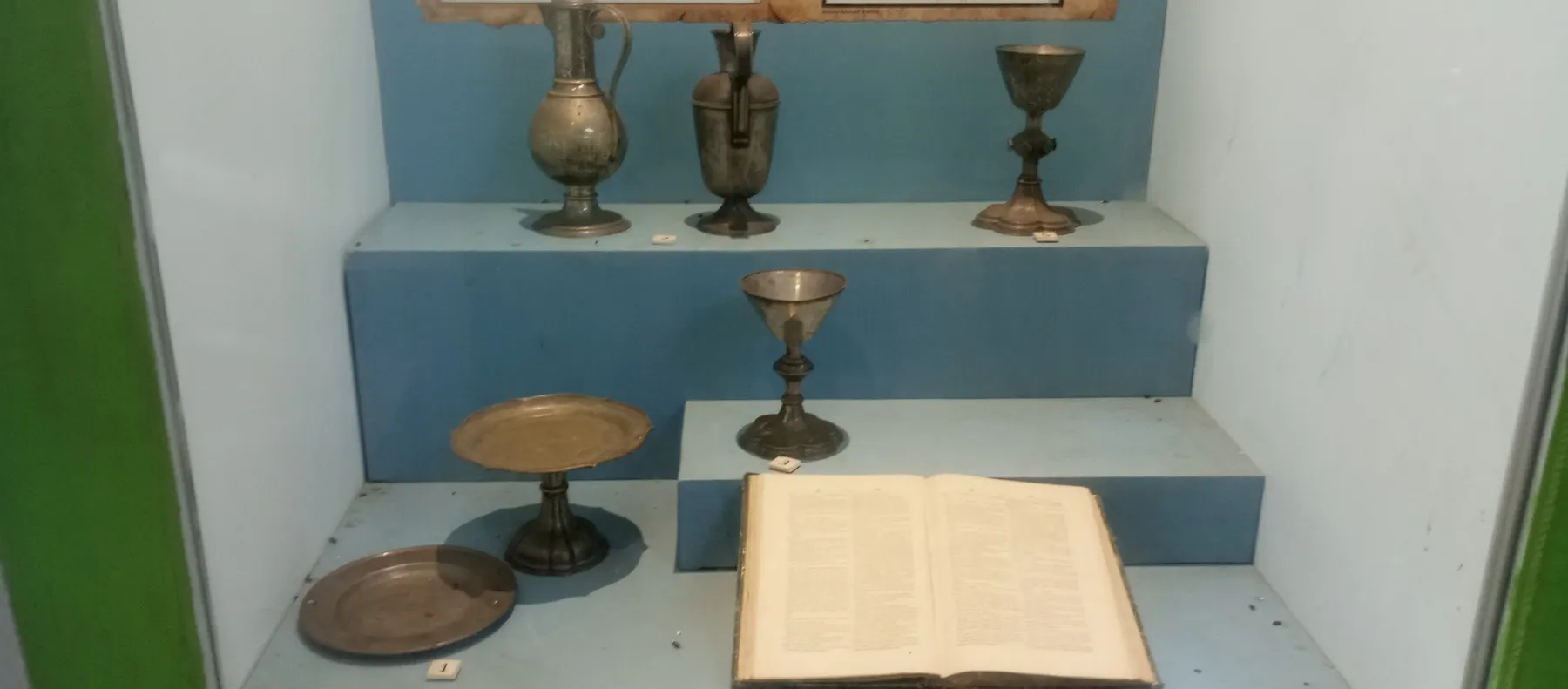
A chalice is bought once and used for decades, so the choice is about materials and proportions rather than fashion. The same is true of a censer or a set of altar bells. This guide explains what the finishes mean, how capacity is measured, and which pieces a sacristy needs before a first Mass can be celebrated.
What a sacristy needs
- Chalice and paten: the cup for the wine and the plate for the priest's host. Sold as a matched set.
- Ciborium: a lidded cup that holds the people's hosts, before and after consecration, and sits in the tabernacle.
- Pyx: a small round box, carried in a cloth burse, for bringing Communion to the sick.
- Cruets: two small bottles for wine and water, usually glass with a tray.
- Lavabo set: a small bowl and ewer for washing the priest's hands.
- Altar cross or crucifix, standing or hanging over the altar; a processional cross on a pole for entrances.
- Altar bells rung at the consecration; a censer (thurible) with a boat for incense; a sanctuary lamp; an aspergillum and bucket for sprinkling holy water.
A new chapel can be equipped from a single maker so the finishes match, or built up piece by piece. Most listings in this department are brass with a gold or silver finish, which suits both approaches.
Materials and plating
Church norms ask that the cup of a chalice be made of a noble, non-absorbent metal, and in practice that means a brass or sterling body with gold plating on the inside of the cup. Listings describe this as 24-karat gold plated, gold-tone, or two-tone when the outside is silver. The plating thickness is rarely stated; a maker's name such as Sudbury Brass, Koleys or Alviti is the better guide to how it will wear.
Stainless steel chalices and ciboria are sold for Protestant communion and for travel kits. They need no polishing and will not tarnish. Brass needs a soft cloth and an occasional non-abrasive polish on the outside only; the gilded cup interior should be rinsed and dried, never polished.
Silver plate tarnishes faster than gold. If a parish has no one to polish regularly, a gold-finish set is the practical choice. Lacquered brass, common in budget candlesticks and crosses, resists tarnish until the lacquer wears, after which it cannot be polished back.
Sizes and capacity
Chalice capacity is given in ounces: 5 to 8 ounces for a priest's chalice, 12 to 16 ounces for a communion chalice when the cup is offered to the people. Height runs from about 6 inches for a travel chalice to 10 inches for an altar chalice. The paten should sit on the cup without rocking, which matched sets guarantee.
Ciboria are rated by host count: 100, 200, 300 or more hosts of the 1 3/8 inch size. Choose by the number of communicants at the largest Mass, then add a smaller ciborium for the tabernacle. A stacking ciborium with a flat lid saves tabernacle space. Pyxes hold 6 to 12 hosts and should fit the burse they come with.
Processional crosses are measured overall, pole included: 60 to 85 inches is usual, and the base or stand is sold separately or included. Altar crosses of 24 inches suit most altars; a standing crucifix should be taller than the candlesticks beside it.
Censers, bells and the small pieces
A censer is sold with its chains and often a stand; the incense boat and spoon may be a separate listing. A censer with four chains and a lid that lifts cleanly is easier for a server to swing. Brass holds heat, so a stand with a drip tray saves the floor.
Altar bells come as three or four bells on a handle or as a single sanctus bell. Four bells give a fuller chime; a single bell is clearer in a small chapel. Cruets of 4 to 6 ounces are enough for a weekday Mass; larger glass cruets with a stopper suit a Sunday with a full chalice.
Holy water sprinklers, or aspergilla, are brass tubes with a perforated head and a sponge or wire core; they come with a matching bucket or alone. A sprinkler with a wire core throws more water and is easier to dry.
Travel kits and oil stocks
A travel Mass kit packs a small chalice and paten, a pyx, cruets, candles and a crucifix into a fitted case for a priest who celebrates in homes, hospitals or on the road. The cheaper kits use stainless steel; better ones gold-plate the chalice cup. A sick call set is for the home being visited: a crucifix, two candles, a holy water bottle and a cloth, kept together in a box.
Oil stocks are small screw-top containers for the holy oils, marked OI, OS and SC for the oil of the infirm, the oil of catechumens and sacred chrism. They are sold singly for the pocket or as a set of three in a case for the ambry.
Questions
Does a chalice have to be gold plated?
The Roman Missal asks for a non-absorbent noble metal for the cup. Gold plating the inside of a brass or silver chalice is the usual way to meet that, which is why most church chalices are gilded inside even when the outside is silver.
How is a brass chalice cleaned?
Rinse the cup with water after Mass and dry it with a soft cloth. Polish the exterior occasionally with a non-abrasive brass polish, keeping it away from the gilded interior, which should only be rinsed.
What size ciborium does a parish need?
Match the host count to the largest Mass: a 200-host ciborium for 150 to 200 communicants, with a second smaller one for reserving hosts in the tabernacle.
Are stainless steel vessels acceptable?
For Protestant communion, yes, and they are the most practical choice. For the Catholic Mass the cup should be a noble metal; stainless steel is generally used only for travel kits and pyxes where a bishop permits.