Christian Brands
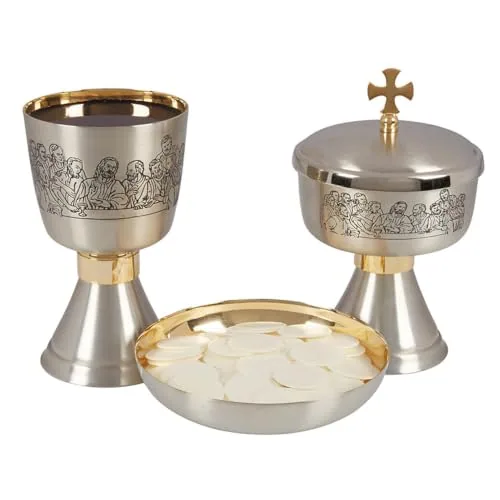
Sudbury Last Supper Chalice and Bowl Paten, 16 oz
Seven-inch brass chalice holding 16 ounces with Last Supper engraving, nickel plating and 24kt gold accents, with a 6-inch bowl paten.
The chalice holds the wine consecrated at Mass, and the paten holds the celebrant's host; most sets pair them in matching finishes. Chalices here range from 5.5 to 9.5 inches tall and hold 5 to 16 ounces. All are brass. Finishes vary: polished 24kt gold plate throughout, nickel or satin nickel with a gold plated cup interior, or silver plate outside with gold inside. Engraved bands, Holy Family emblems and loaves and fish nodes are the common decorations.
Match capacity to use. A 12 to 16 ounce chalice with a bowl paten suits Sunday Mass when the chalice is shared or hosts are consecrated on the paten. A 5 or 7.5 ounce chalice from the Christian Brands range serves daily Mass, hospital chapels and travel. Two of the sets include a carrying case. Decide between gold and silver tone to match the ciborium and tabernacle fittings. Every maker here advises polishing with a soft cloth.
The nine chalice and paten sets below span 5 to 16 ounces in gold, nickel, two-tone and silver plated finishes.
Seven-inch brass chalice holding 16 ounces with Last Supper engraving, nickel plating and 24kt gold accents, with a 6-inch bowl paten.
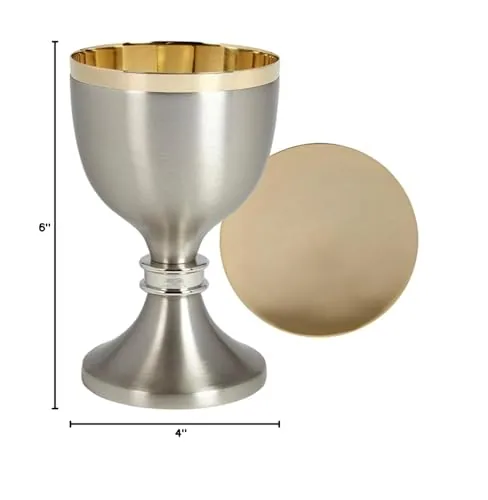
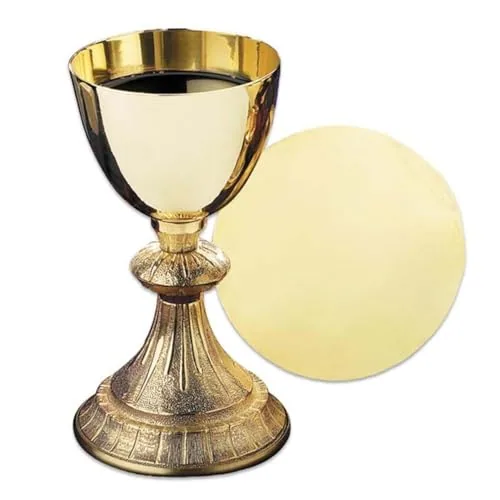
Six-inch satin nickel plated brass chalice with a 4-inch cup, 24kt gold plated interior, and a matching two-tone paten.
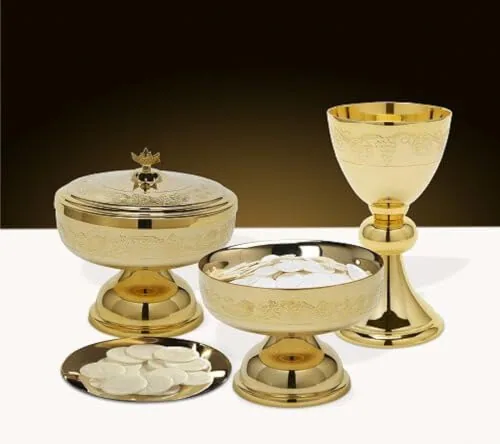
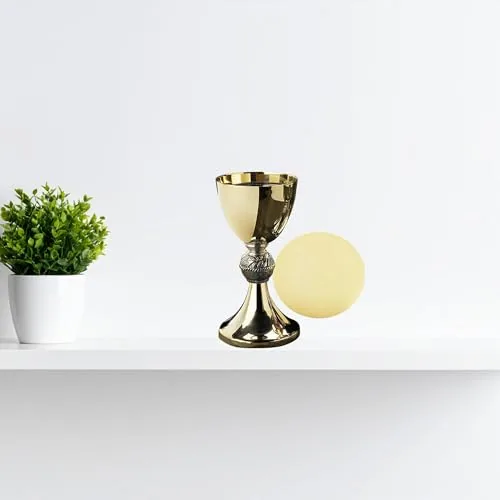
Polished 24kt gold plated brass chalice, 7.5 inches tall with a 12 ounce cup and engraved grape and leaf band, with paten.
Gold plated solid brass chalice 9.5 inches tall with a 7.5 ounce cup, Holy Family emblems on the base, 5-inch paten and carrying case.
Nickel plated 8-inch chalice with 12 ounce capacity, gold plated interior, loaves and fish engraving, 5-inch paten and protective case.
Compact 5.5-inch chalice holding 5 ounces with gold plated cup, embossed antique silver stem and a 4-inch matching paten.
Footed brass chalice with gold plating and a dual finish design, 3.75-inch cup diameter and 12 ounce capacity, with matching paten.
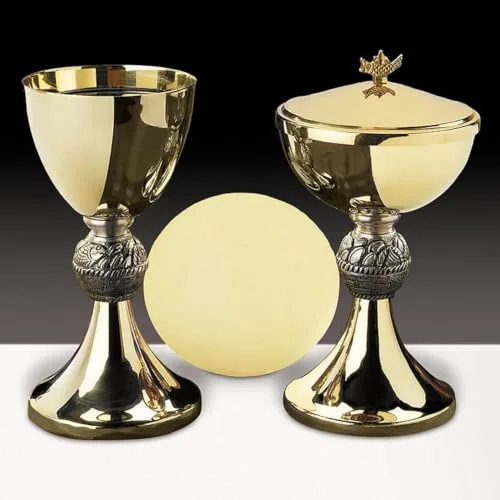
Gold plated brass chalice 8 inches tall with a 4-inch cup, a silver-tone loaves and fishes node, 12 ounce capacity, and matching paten.
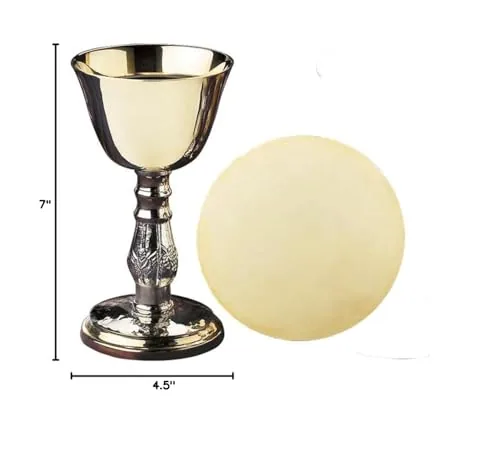
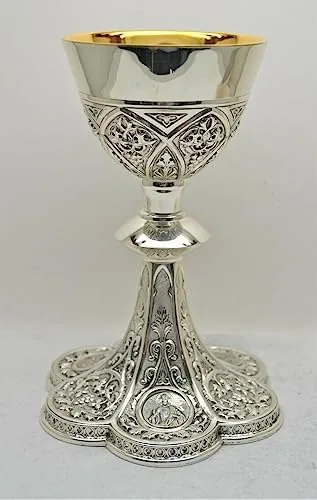
European-made Gothic chalice 8 1/4 inches tall, silver plated outside and gold plated inside, with Holy Family panels and a 5 3/4 inch paten.
The specifications the makers publish, in one table.
A 12 ounce chalice serves a typical Sunday Mass where only the priest and a few ministers receive from the cup. Choose 16 ounces when Communion under both kinds is offered widely. For daily Mass with a handful of people, a 5 to 7.5 ounce chalice is sufficient.
A bowl paten is a shallow dish about 6 inches across and over an inch deep. It holds many hosts as well as the celebrant's host. It replaces or supplements a ciborium at Mass. A flat paten, usually 4 to 5 inches, sits on top of the chalice and holds the large host.
Rinse the cup with warm water after use, dry it fully and polish with a soft, dry cloth. Avoid abrasive metal polish, which wears through the plating. The makers listed here recommend a soft cloth only. Have a plated chalice replated by a church goods firm when the interior wears.
Tradition and many diocesan norms call for the interior of the cup to be gilded or made of a noble metal that does not corrode. Makers therefore gold plate the inside and leave the outside in nickel, silver or satin finish for contrast. The two-tone sets here follow that pattern.